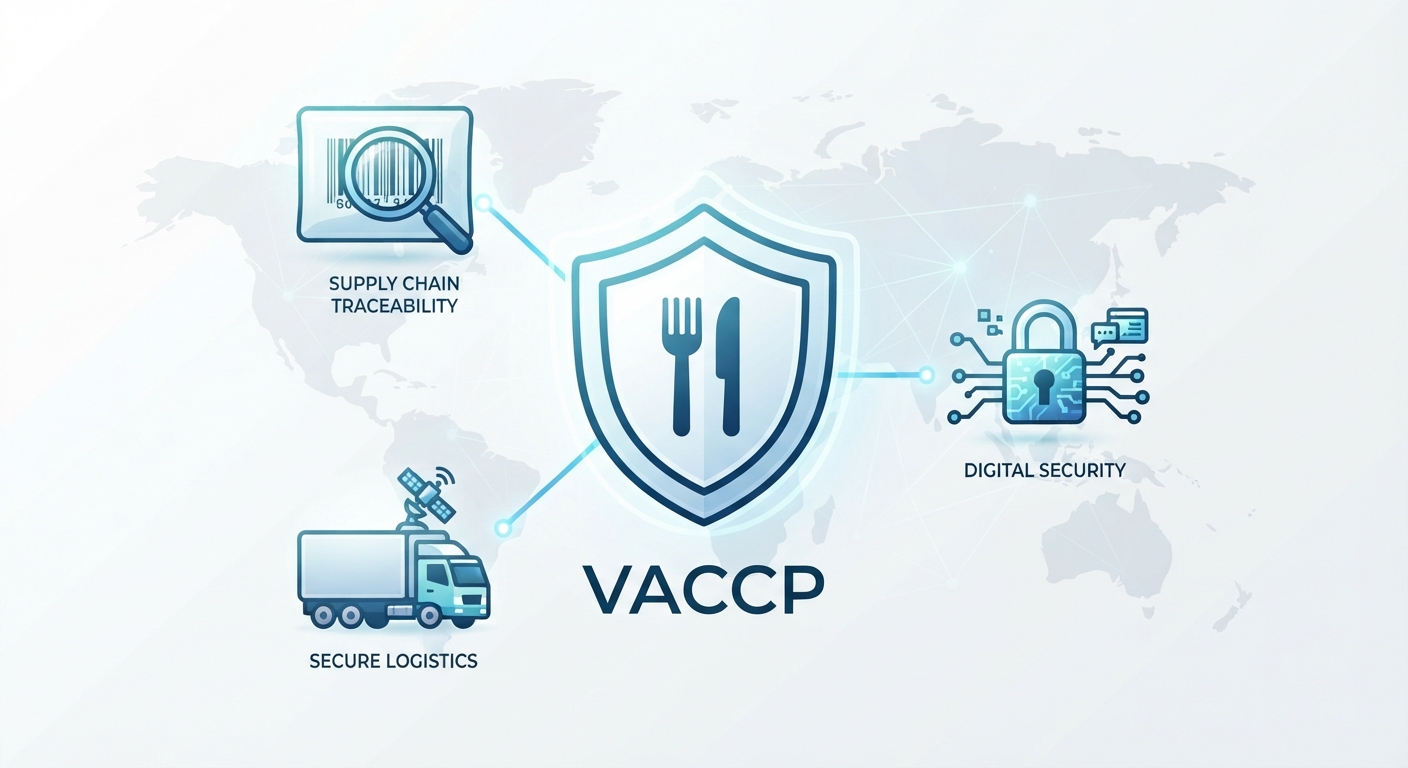
What is VACCP?
Unlike traditional food safety systems that handle accidental or biological hazards, VACCP focuses on people who deliberately alter, fake, or misrepresent food products to make illegal financial profits.
It is officially endorsed by the Global Food Safety Initiative (GFSI) and works alongside other key risk models to form a complete product safety defense.
HACCP vs. TACCP vs. VACCP
- HACCP (Hazard Analysis and Critical Control Points): Focuses on accidental, unintentional hazards—such as biological bacteria (Salmonella), chemical spills, or physical glass shards.
- VACCP (Vulnerability Assessment and Critical Control Points): Focuses on intentional deception driven by money and economic gain (food fraud, dilution, substitution, and fake labels).
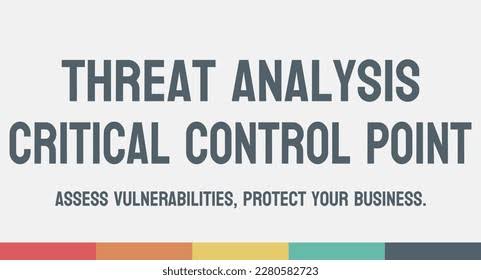
- TACCP (Threat Assessment and Critical Control Points): Focuses on intentional harm driven by malicious intent, sabotage, terrorism, or ideology (tampering with food to cause injury or panic).
Common Types of Food Fraud Covered by VACCP
Fraudsters constantly look for ways to cheat the supply chain. VACCP targets seven main areas:
- Adulteration: Adding a foreign or cheaper substance to lower costs.
- Substitution: Replacing a high-value ingredient with a lower-grade alternative (e.g., swapping olive oil with cheaper seed oils).
- Dilution: Watering down liquids or mixing pure products with cheap fillers.
- Counterfeiting: Copying brand packaging and selling fake goods as the real brand.
- Misrepresentation of Source: Lying about the geographic origin, farm, or species of the food.
- Concealment: Hiding the poor quality or damage of an ingredient using illegal additives.
- Mislabeling: Faking expiration dates, organic claims, or allergen status.
High-risk ingredients frequently targeted include olive oil, honey, spices, milk, and expensive seafood.
Why VACCP is Critical for the Food Industry
VACCP is essential for protecting a food business's brand reputation, legal standing, and financial health. While food fraud is driven by money, it frequently causes severe, unintended public health crises.
- Preventing Health Crises: Fraudulent ingredients can kill. For example, diluting milk with industrial melamine or substituting premium cumin with ground peanut shells introduces undeclared, lethal allergens and toxic chemicals into the food supply.
- Securing Global Compliance: Major international food safety standards—including BRCGS, IFS, FSSC 22000, and SQF—mandate a documented food fraud vulnerability assessment. Without a VACCP plan, facilities lose their Global Food Safety Initiative (GFSI) certifications and access to major retail markets.
- Mitigating Severe Financial Loss: Food fraud is estimated to cost the global food industry tens of billions of dollars annually. A single recall caused by a fraudulent ingredient can bankrupt a mid-sized company through legal liabilities, waste, and lost contracts.
- Maintaining Consumer Trust: Modern consumers demand transparency. Discovery of counterfeit, mislabeled, or diluted ingredients permanently destroys brand loyalty and corporate integrity.
Key Challenges in Implementing VACCP
Implementing an effective VACCP plan is often more complicated than traditional food safety (HACCP) because it requires analyzing human behavior and economics rather than predictable biological data.
- Extreme Supply Chain Complexity: Modern food supply chains are vast and highly fragmented. Ingredients frequently change hands across multiple international brokers, blenders, and distributors, making true traceability nearly impossible.
- Sophisticated Fraud Tactics: Food fraudsters do not want to be caught. They intentionally design adulterants to bypass standard quality control and testing parameters (e.g., using specific nitrogen-rich compounds to fool simple protein testing).
- The "Purchasing vs. Quality" Communication Gap: Purchasing departments are traditionally incentivized to buy the cheapest ingredients to save money. Quality assurance teams are incentivized to maintain safety. VACCP requires these two siloed teams to share data seamlessly, which rarely happens naturally.
- Predicting Market Volatility (Horizon Scanning): VACCP requires continuous monitoring of global events. Crop failures, geopolitical conflicts, sudden trade tariffs, or rapid inflation can instantly create a lucrative black market for specific ingredients overnight.
- Lack of Historical Data: Unlike bacteria or chemical hazards, there is no centralized database tracking every failed batch or fraudulent transaction globally. Companies must rely on guesswork and fragmented intelligence to score their supplier risks.